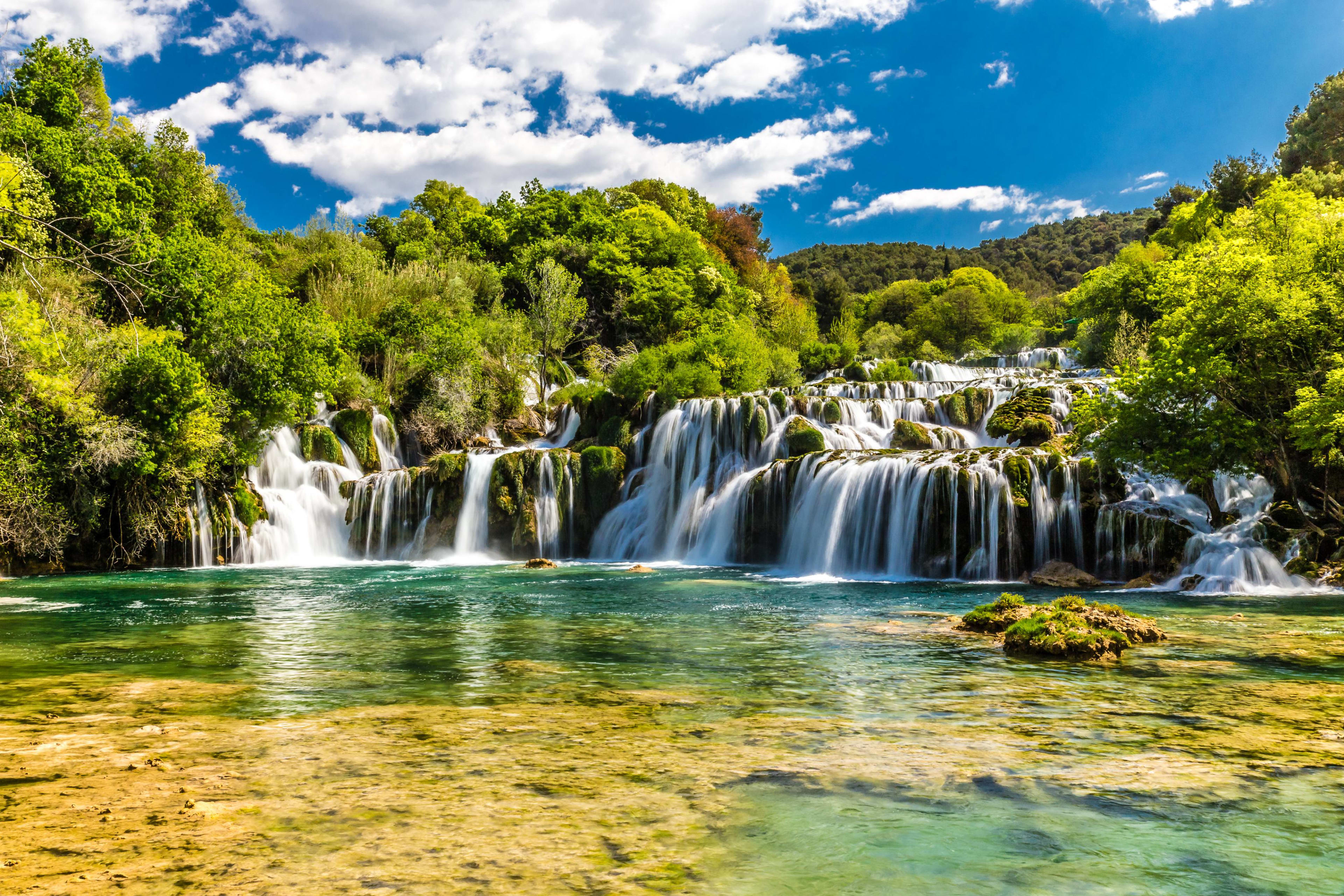

Croatia's rivers are one of the country's best-kept secrets. While the Adriatic coast absorbs almost all of the visitor's attention, a completely different landscape runs behind it: a series of deep karst canyons, underground springs, and freshwater systems that produce some of the most beautiful swimming in Europe. Geology is the key. Croatia sits on the Dinaric karst, a vast formation of dissolved limestone that filters and purifies groundwater over centuries before releasing it as springs of extraordinary clarity and colour.
The result is rivers that run turquoise, green, and cobalt-blue. Rivers with waterfalls inside them. Rivers cold enough in June to take your breath away, and warm enough by August to swim for an hour. Rivers with canyon walls rising 200 metres on either side, and no one else around.
The Cetina River, Dalmatia
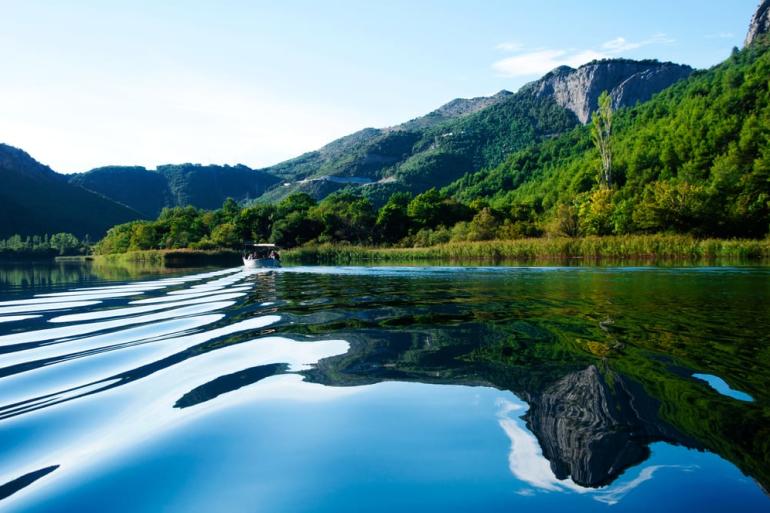
Near Omiš, Split-Dalmatia County
The Cetina is the most water-rich river in Dalmatia, and it meets the sea in the most dramatic way possible: through a narrow gorge directly into the town of Omiš, with the Adriatic waiting on the other side. But the river's best moments are upstream, in the 10-kilometre limestone canyon that runs inland from the coast.
The water here is crystal-green, fed by underground springs from the Dinaric mountains. It runs through canyon walls that rise to 200 metres, past ancient mills, rope swings, and natural pools. The standard rafting route covers the canyon from the Radmanove Mlinice area to the coast, a half-day trip that includes both swimming breaks and Class II–III rapids. At the midpoint, the canyon widens into a calm natural pool that is one of the most photographed spots in inland Dalmatia.
For independent swimmers, the lower reaches of the Cetina near Omiš are accessible directly - the river mouth where freshwater meets the Adriatic produces an unusual mix of temperatures and colours. Upstream, the canyon is best explored with a guide.
The Zrmanja River, Northern Dalmatia
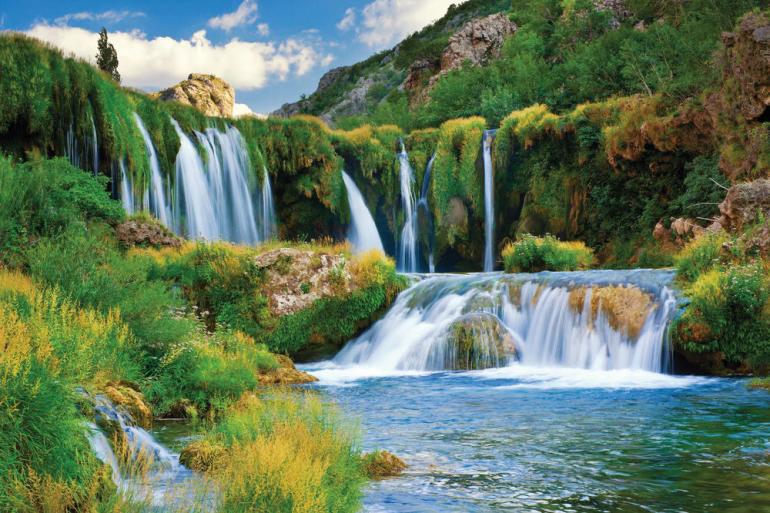
Zadar hinterland, Velebit Nature Park
The Zrmanja is, by most measures, the most spectacular river in Croatia. It is also the least known to foreign visitors, which is part of what makes it extraordinary. Rising in Lika and cutting through the Velebit Nature Park on its 69-kilometre journey to the sea, the Zrmanja has carved a series of seven canyons through the karst, with cliffs that reach 200 metres and a river floor of layered tufa and travertine that turns the water a deep, glassy green.
The main kayaking section runs 14 kilometres between Kaštel Žegarski and the village of Muškovci. Along the way, the river is interrupted by waterfalls, including the 10-metre Visoki Buk (the highest on the Zrmanja) and the meeting point with the Krupa River, a short tributary where an 8-metre waterfall drops into a natural swimming pool. Guides stop here for a swimming break, and most people spend an hour jumping, climbing, and doing very little else.
The Zrmanja sits within Velebit Nature Park, so park regulations require paddling to be organised through licensed operators. All access is through licensed operators based an hour from Zadar. In spring and autumn the water level is high enough for rafting; from June onwards, kayaks take over. The water stays cold, refreshing rather than warm, even in August.
The Krka River - Beyond the National Park
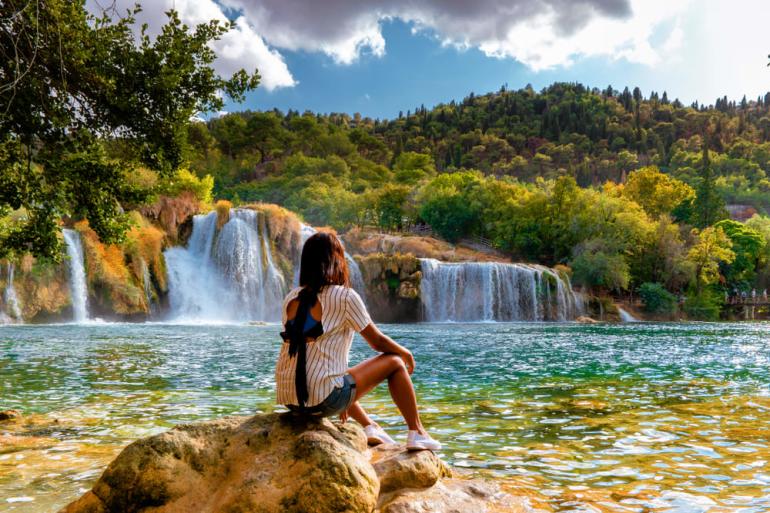
Almost everyone who visits Krka National Park wants to swim under the famous Skradinski Buk waterfall. And until 2021, you could. Since the introduction of new rules to protect the park's delicate travertine formations, swimming at Skradinski Buk is no longer permitted, a change that has frustrated many visitors and generated no small amount of confusion online.
The situation is more nuanced than the headlines suggest. Swimming in the Krka remains possible at three designated locations within the park: Roški Slap, Stinica, and Pisak. These are permitted from 1 June to 30 September. Outside the park, the town of Skradin, where the Krka meets a mix of fresh and salt water before reaching the sea, has a city beach that is genuinely lovely, and the brackish water produces an unusual and refreshing quality unlike a pure river or pure sea.
Kupa River & Source
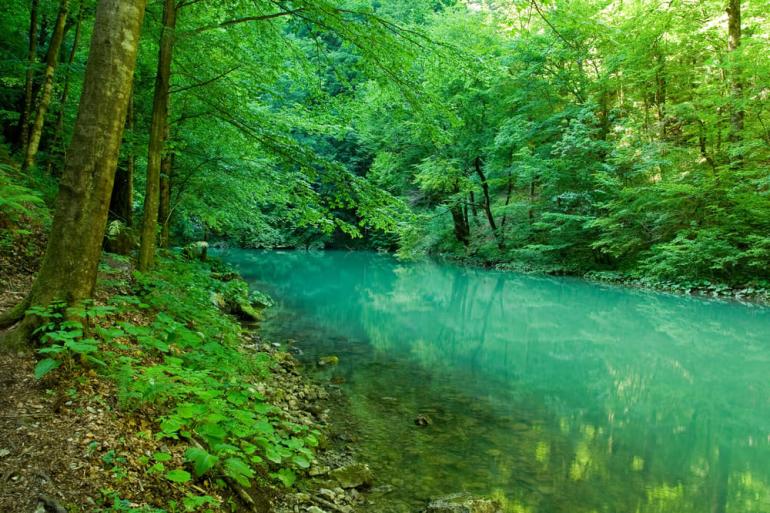
Gorski Kotar, near Risnjak National Park
Most visitors to Croatia never make it to Gorski Kotar. This is a dense, forested mountain region between Rijeka and Karlovac, only an hour from the coast, but an entirely different world. The landscape is Alpine: thick with oak, beech, and spruce; cooler by 8–10 degrees than the coast; and laced with rivers and lakes that feel more Norwegian than Mediterranean.
The Kupa River begins at one of the most striking river sources in Europe: a turquoise-green karst lake near the village of Razloge, set beneath a vertical cliff. The lake itself is a startling blue-green, and the river flows from it at full width, as though the mountain has simply decided to stop holding the water back. The source is reachable via a scenic trail from Risnjak National Park.
Downstream, the Kupa becomes a fast river before slowing into a calmer flow criss-crossed with old mill weirs. The swimming areas at Brod na Kupi and near Vrbovsko are popular with local families, crystal clear, cold, and surrounded by forest. Water temperatures reach around 20–23°C in July and August, which feels substantial given the mountain air temperature.
The Mrežnica River: Croatia's Most Underrated
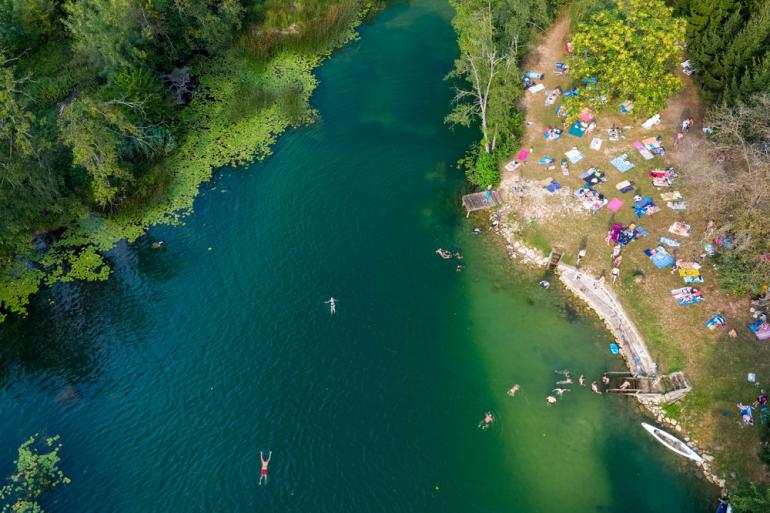
Mention the Mrežnica to Croatian locals and they light up. Mention it to foreign tourists and you are met with blank looks. This is, essentially, the entire appeal.
The Mrežnica is a short river, only 63 kilometres, that flows through central Croatia near Karlovac. What it lacks in length it makes up for in character. The river is punctuated by small waterfalls and cascades, each creating a natural pool behind it. The water is emerald green and clear to the bottom. There are rope swings, small wooden bridges, and old water mills along the banks. There is almost no tourist infrastructure, which means you are likely to share the river with Croatian families grilling by the water rather than with anyone on an organised tour.
When To Go
The wild swimming season in Croatia runs from June to September. Each month has a distinct character:
May - cold, beautiful, very quiet
June - cold & uncrowded
July - peak season, warm
August - warmest, busiest
September - quieter, still warm
June is the sweet spot for river swimming. Water temperatures are lower, the rivers are cold, properly cold, but the days are long and warm, the crowds are lighter, and the rivers are running at full volume. By late August the water has warmed considerably in slower sections but remains refreshing in the canyon rivers, where depth and shade keep the temperature down.
The Bigger Picture
Croatia's freshwater is a system under pressure. The Krka swimming ban is not bureaucratic overreach, it reflects genuine scientific evidence that sunscreen, body oils, and the physical disturbance of thousands of swimmers was damaging the travertine formations that make the waterfalls possible. The same logic applies, more quietly, to every river and lake in this guide.
Wild swimming done right is low impact: no motorised boats, no amplified music, no single-use plastic, no campfires near the riverbank. It leaves the water cleaner than you found it. Croatia's rivers are extraordinary precisely because they have been protected, often through luck as much as policy. The best thing a visitor can do is treat them accordingly.
There is a kind of travel that takes you further in than a beach ever can. The rivers of Croatia are part of that - hidden behind the coast, inside the mountains, running cold and clear through canyons that most people never see. They are worth the drive.