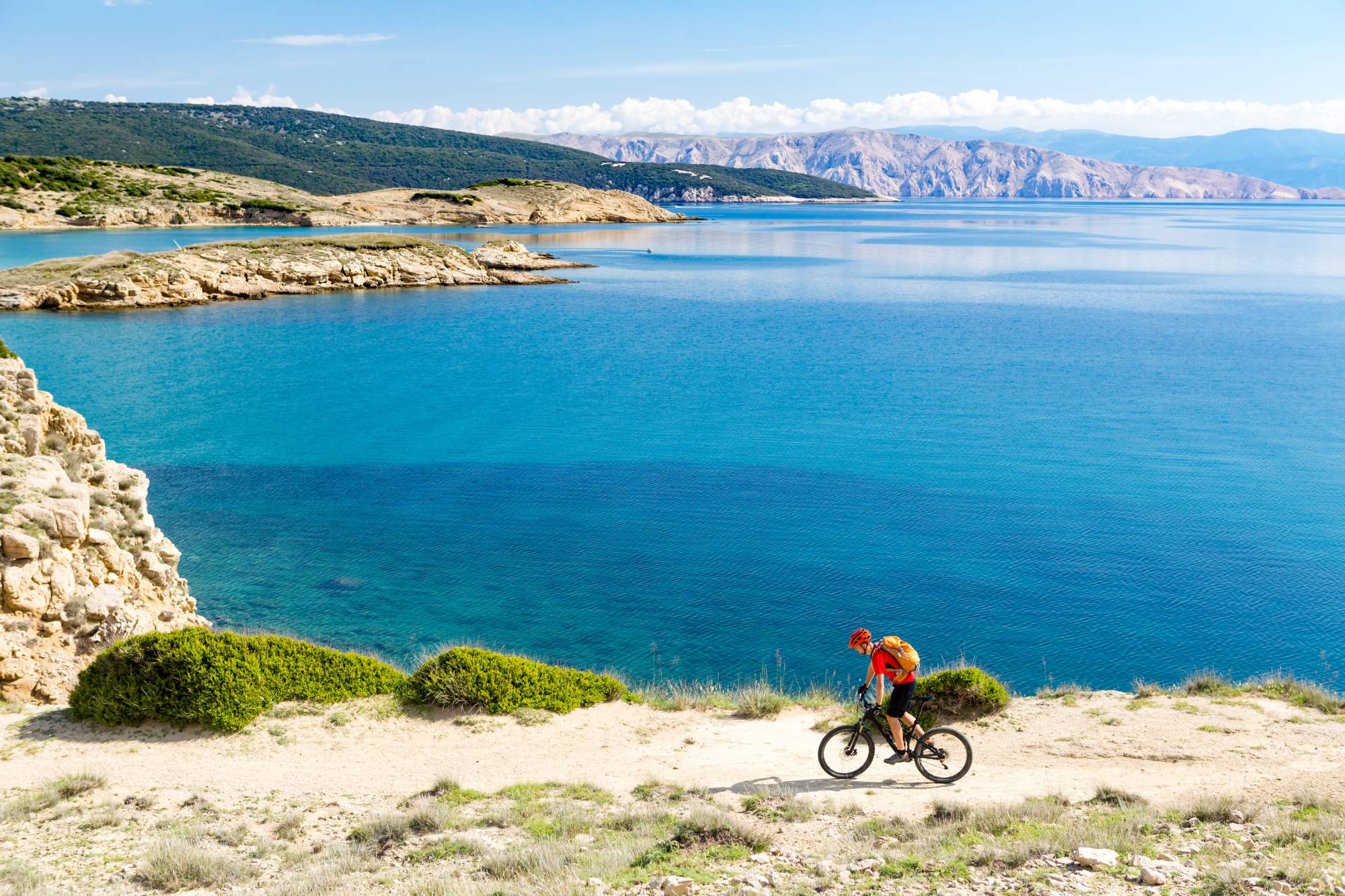

The Parenzana Trail, Istria
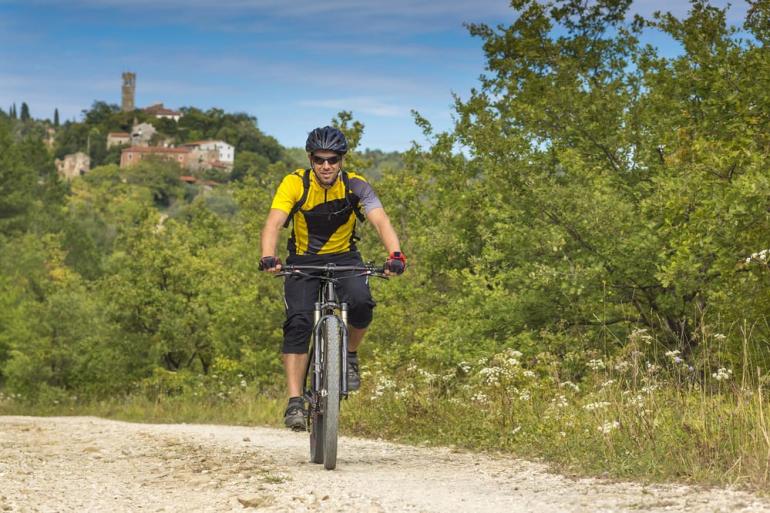
More than a century ago, a narrow-gauge railway connected the villages of Istria to the coast, carrying wine, olive oil, and people across a landscape of rolling hills and medieval hilltops. The trains stopped running in 1935. The track became a path, and the path became one of the most rewarding cycling routes in the Mediterranean.
The Parenzana today stretches 123 kilometres from Trieste through Slovenia and into Croatia, ending in Poreč. The Croatian section alone covers 78 kilometres, passing through old tunnels and over stone viaducts, with Motovun and Grožnjan perched on the hilltops above — places that feel untouched precisely because no bus can reach them.
The terrain is gentle enough for casual riders, but the scenery refuses to be ordinary. Stop at any agritourism farm along the route and you will leave with truffle pasta, a glass of Malvazija, and a desire to never ride anywhere else.
Best for: beginners and casual cyclists.
Hvar Island
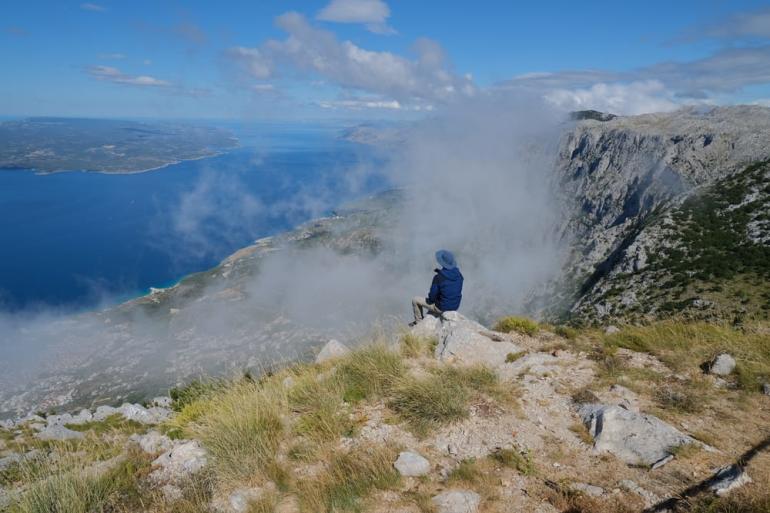
Hvar has a reputation. Yacht parties, cocktail bars, influencers in white linen. None of that is wrong, exactly, but none of it is the whole island either. Ride inland from Stari Grad and the scene shifts completely: winding trails through lavender fields and fragrant pine forests, stone villages where the afternoon heat settles into silence, descents to hidden coves on the southern shore where the only sounds are the cicadas and the sea.
The climbs are real. The island spine reaches above 500 metres and the roads demand respect, especially in summer heat. Start early, carry water, and let yourself be surprised by how large and how wild Hvar turns out to be when you're moving through it rather than along its edges.
The ferry from Split takes under two hours and carries bikes for a few euros. From the moment you roll off the ramp in Stari Grad, the crowds disappear.
Best for: intermediate cyclists.
The Pelješac Peninsula

Pelješac is a long, narrow peninsula stretching south toward Korčula, and it might be Croatia's most underrated cycling destination. The roads carry almost no traffic. The landscape alternates between dramatic coastal drops and inland valleys filled with Plavac Mali vines, the grape behind Dingač, one of Croatia's finest reds.
At the western tip, the medieval walls of Ston are among the longest defensive structures in Europe, second only to the Great Wall of China in length. Cycle through them on a warm morning and the history feels immediate in a way that guidebooks can't manufacture.
Combine Pelješac with a short ferry hop to Korčula - another island of olive groves, stone villages, and quiet roads - and you have a Dalmatian loop that could easily fill a week without repeating a single road.
Best for: intermediate cyclists.
Krk, Rab and Cres

The Kvarner islands sit just south of Istria, close enough to feel connected to the mainland and wild enough to feel genuinely remote. Krk is the largest and most accessible, a good warm-up with varied terrain and reliable infrastructure. Rab is smaller and flatter, ideal for a rest day or a longer beach stop. Cres is something else entirely.
Cres is almost 68 kilometres long, sparsely populated, and largely traffic-free. The road runs along the ridge of the island with views across to the mainland on one side and open sea on the other. Griffon vultures circle the northern cliffs. The villages feel forgotten in the best possible way. For cyclists who want to feel genuinely remote without leaving Croatia, Cres is the answer.
Jadrolinija ferries connect the islands reliably, and bikes travel for a small surcharge. Book accommodation ahead in shoulder season, not because it fills up quickly, but because the best places deserve a reservation.
Best for: experienced cyclists.
A Few Things Worth Knowing Before You Go
The season matters more than you think. April through June and September through October are the sweet spots. Comfortable temperatures, quiet roads, and wildflowers covering the roadsides. July and August are possible, but start before eight in the morning and treat every climb with more respect than you think it needs.
Ferries are simple. Jadrolinija, the national ferry operator, carries bikes on virtually every route for a few euros. No special reservation required for the bike. Just show up, wheel it on, and find a spot on deck.
E-bikes are changing everything. Rental shops in Poreč, Split, Hvar Town and Dubrovnik all stock electric bikes now. For anyone who wants the experience without the suffering on steep island roads, they're a genuine option and nothing to be embarrassed about.
Eat where cyclists eat. In small coastal towns, look for konobas without an English menu outside. The food will be better, the portions larger, and the owner will probably ask where you came from and where you're going — which, on a cycling trip in Croatia, is always a story worth telling.
The best thing about cycling Croatia is that you move at the speed of the landscape. You smell the rosemary before you see it. You hear the cicadas long before you stop. The bus takes you between places; the bike takes you through them.
All you need to do is show up and start pedalling.