
Why the Adriatic Is Different
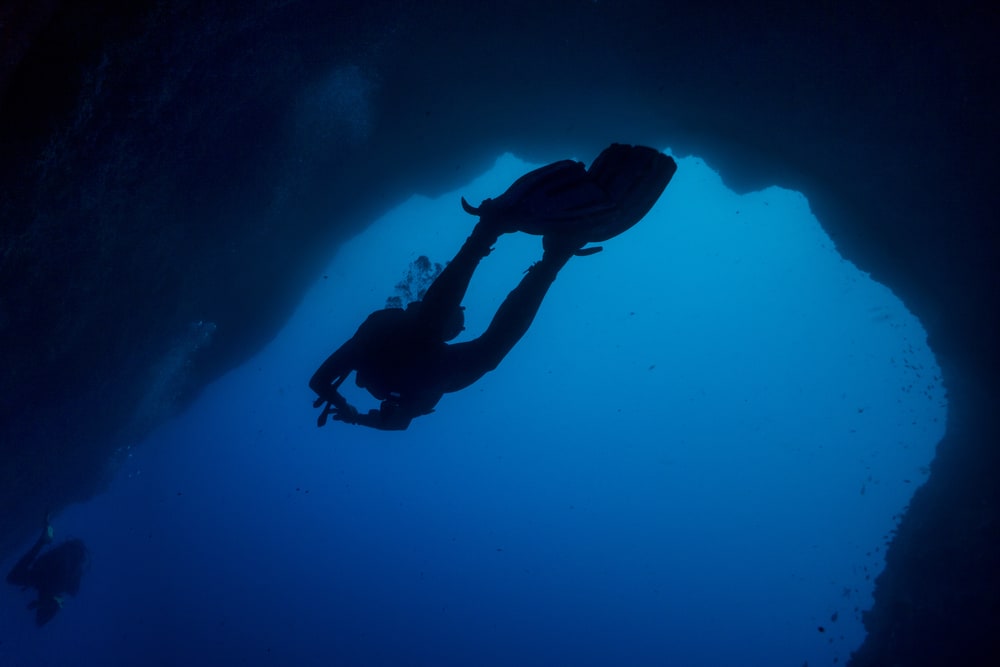
The Adriatic is one of the cleanest seas in the Mediterranean, and that clarity is not accidental. Croatia has more protected marine areas than most of its neighbours, relatively low industrial pressure along the coast, and a tradition of small-scale fishing that has, at least in places, left the seabed largely intact. Visibility regularly reaches 30 to 40 metres. On a calm morning in early June, looking down from a boat into 20 metres of water feels like looking through glass.
That clarity means everything beneath the surface is visible in a way that simply does not happen in murkier seas. Colours stay vivid at depth. The textures of posidonia meadows, rocky walls and sandy channels read clearly from above. And life - fish, octopus, sponge, sea urchin, the occasional loggerhead turtle drifting past without urgency - goes about its business in plain sight.
The Wrecks: History You Can Swim Through
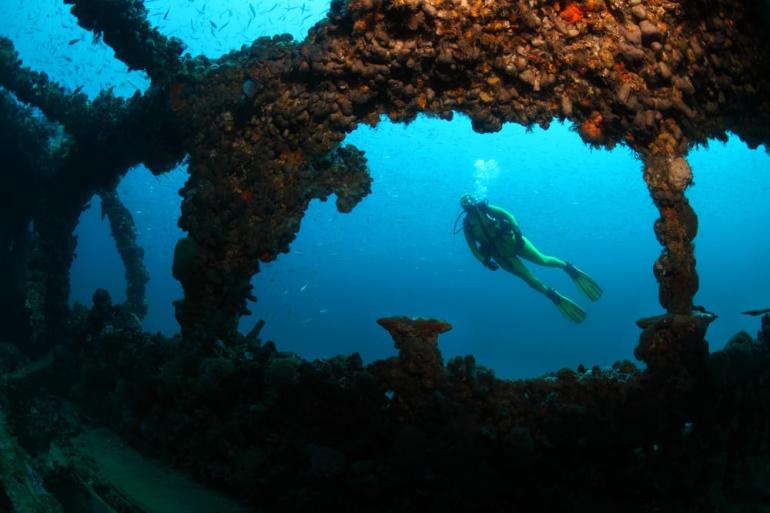
Croatia's coastline has been a maritime crossroads for more than two thousand years, and the seabed reflects that. Beneath the Adriatic lie Greek amphorae, Roman trading vessels, Venetian galleys, and twentieth-century warships, a scattered archive of everything that once moved across this water and didn't make it home.
The Baron Gautsch, off the coast of Rovinj in Istria, is perhaps the most famous wreck in Croatian waters. An Austro-Hungarian passenger steamship that struck a mine in 1914, it now rests at around 40 metres, largely intact, surrounded by schools of fish that have made it their permanent address. It is considered one of the best wreck dives in the Mediterranean, and on any given morning you will share it with divers who have travelled specifically from Germany, Austria and the Netherlands to be there.
Off the island of Vis, the waters hold more recent history. Several Second World War wrecks lie within recreational diving depth, including a B-17 Flying Fortress that has become one of the most photographed dive sites in the Adriatic. Vis itself was a closed military zone until 1989, which means its underwater environment was left undisturbed for decades longer than most of the coast.
For those interested in antiquity, ancient amphorae fields lie scattered across the seabed between islands - remnants of Roman trade routes that ran north to south along the Dalmatian coast for centuries. You cannot take anything, but you can hover above them and feel the weight of what they represent.
The Caves: A Different Kind of Darkness
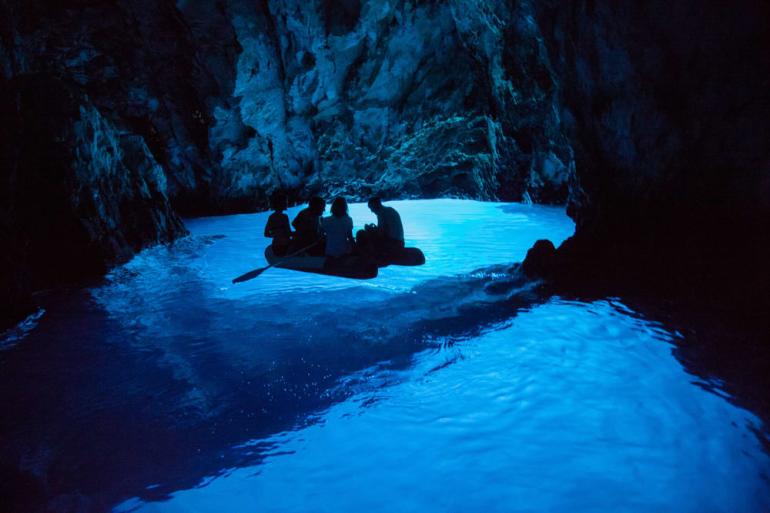
Croatia's coastline is karst, limestone sculpted by water over millions of years, and that geology does not stop at the waterline. Beneath the surface, the same forces that created Plitvice and Krka have carved an entirely different world: underwater caves, tunnels, and caverns that are among the most dramatic dive sites in the Adriatic.
The Blue Cave on the island of Biševo is the most famous, and deservedly so. At around noon, sunlight enters through an underwater opening and bounces off the white limestone floor, filling the cave with an unearthly blue glow that photographs cannot adequately capture. Visitors enter aboard small authorised boats, weather permitting; swimming inside the cave is not allowed, and no diving experience is required.
For certified divers, the caves around the islands of Kornati, Vis and Lastovo offer more demanding and more rewarding experiences. The Medvidina špilja (Monk Seal Cave) on the island of Biševo was once home to the Mediterranean monk seal, now functionally extinct in the Adriatic, but the cave itself remains: a vast cathedral of rock just below the surface, empty and extraordinary.
The Meadows and the Life That Fills Them
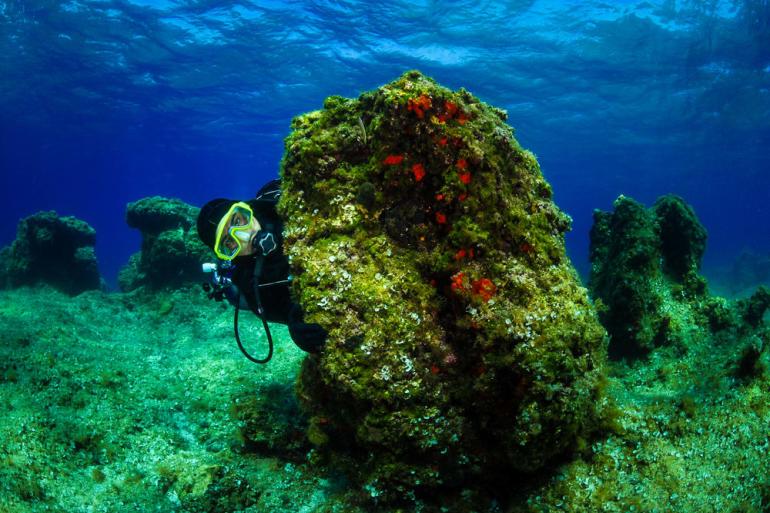
Less dramatic than wrecks or caves, but perhaps more important: the posidonia meadows. Posidonia oceanica is a seagrass endemic to the Mediterranean, slow-growing and ancient (some meadows are estimated to be thousands of years old) and it forms the ecological foundation of the Adriatic. Fish breed in it. Seahorses hold onto it with their tails. The oxygen it produces, quietly, every day, is the reason the water is as clear as it is.
You can snorkel above posidonia meadows almost anywhere along the Croatian coast, and most people do so without knowing what they are looking at. Spend a few minutes watching and the meadow reveals itself: tiny fish darting between the blades, sea cucumbers moving with geological slowness across the sand, the occasional octopus (improbably clever, improbably well-camouflaged) frozen against a rock while deciding whether you are a threat.
The islands of the Kornati archipelago, a national park since 1980, offer some of the most pristine marine habitat in Croatia. The walls drop vertically from the surface to depths of 50 metres and beyond, covered in sponges, gorgonian fans, and corals that look like they belong in the tropics. Above the water, Kornati is all bare white limestone and silence. Below it, the walls are alive in a way that takes the breath away.
Experience the Adriatic at Any Skill Level

You do not need to be a diver to see what is beneath the Adriatic. A mask and snorkel in a metre of water above a rocky Dalmatian shore will show you more life than most people expect. Sea urchins clustered in crevices, wrasse hovering in the current, a small octopus retreating under a ledge, this is the Adriatic that locals grew up with and that most visitors float past without noticing.
For those who want to go deeper, Croatia has dive centres in virtually every coastal town, from Umag in Istria to Cavtat near Dubrovnik. PADI courses are widely available, and the calm, clear conditions make Croatian waters an excellent place to learn. Most centres also offer guided snorkelling trips to sites that would be difficult to reach independently, including some of the shallower wrecks and caves.
For experienced divers, the combination of history, geology and marine life in Croatian waters is genuinely hard to match elsewhere in the Mediterranean. A week of diving between Vis, Korčula and Lastovo, three islands with minimal tourist infrastructure and extraordinary underwater topography, is the kind of trip that people come back from with a different relationship to the sea.
The geology beneath the Adriatic is ancient, while the coastline we recognise today took shape as sea levels rose after the last Ice Age. For thousands of years, life beneath the surface has adapted to this changing sea, long before the first trading ships crossed its waters.
Get in the water. Look down. Croatia does not end at the surface.