
Croatia’s sun-drenched coast echoes with remnants of the Roman Empire at every turn. From grand amphitheaters to hidden countryside villas, the Roman ruins in Croatia invite travelers on a luxurious journey through history. But there is so much more to learn, see, and experience about ancient Rome in Croatia. With RealCroatia’s local insiders, travelers discover both popular wonders and hidden paths, where ancient Rome meets modern comfort. We craft journeys based on real expertise, whether your interest is imperial power along the coast or the forgotten frontier life of the continental interior. Let's explore what's truly here.
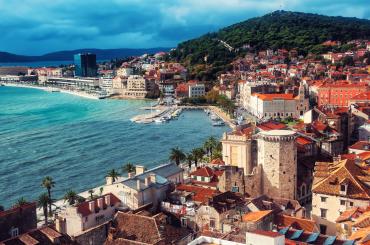
When Diocletian, a man of Dalmatian birth, abdicated in 305 AD, he built this seaside fortress-villa for his retirement
The Adriatic coast was the Roman Empire’s glamorous face, a place of strategic ports, staggering wealth, and imperial ambition. The evidence here is dramatic and unmissable.
Split: Living Inside an Emperor’s Mind
Emperor Diocletian’s Palace isn't a museum; it’s the living, breathing heart of a city. This simple fact is what makes it unlike any other Roman site on Earth. When Diocletian, a man of Dalmatian birth, abdicated in 305 AD, he built this seaside fortress-villa for his retirement. The Palace was so well-constructed that when the nearby capital of Salona fell 300 years later, its refugees fled behind these very walls and never left.
The result is a city where seventeen centuries of history are layered on top of each other. A Gothic palace is fused to a Roman wall; a Renaissance window is punched through a watchtower.
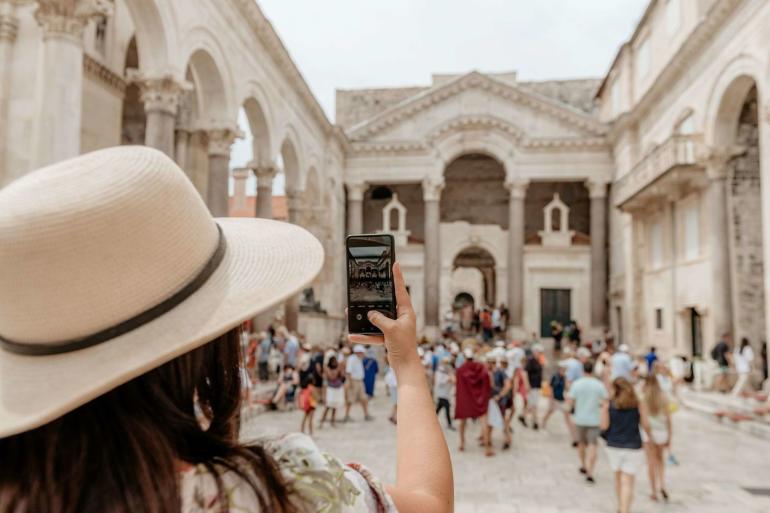 Photo: Wirestock Creators
Diocletian’s Palace: Emperor’s retirement residence from c. AD 305, now the vibrant core of Split’s UNESCO‑listed historic centre
To experience it properly, you must stay within its walls. We can secure you a room in a boutique hotel where your balcony overlooks the Peristyle, Diocletian’s personal courtyard. From there, you can explore the cavernous, perfectly preserved basement halls that supported the imperial apartments, their scale revealing the sheer grandeur of the structure above. It’s the most tangible way to grasp the mind of the man who built it.
Salona: Walking the Streets of a Lost Metropolis
You cannot understand Split without understanding Salona. A short private transfer takes you to what was once the capital of Roman Dalmatia, a bustling port city of 60,000 people. Today, it’s a sprawling archaeological park. Without an expert eye, it can feel like a confusing field of stones. With one of our specialist guides, it comes alive.
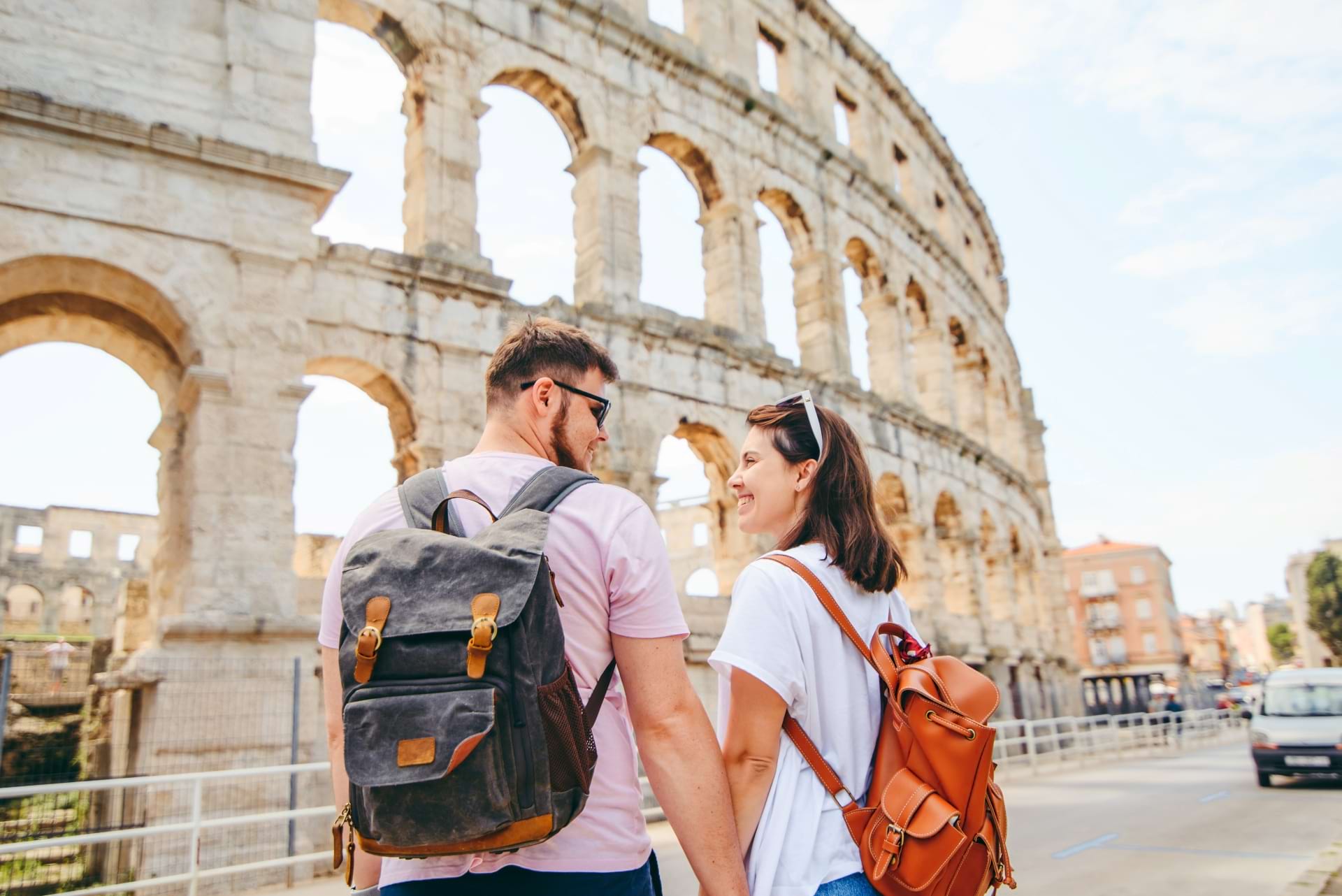
In Istria, the Pula Arena is an unavoidable statement of Roman power. It is one of the six largest amphitheaters in existence
We’ll walk you through the ruins of its amphitheater, the public baths, and the foundations of early Christian basilicas. We’ll show you where the martyrs of Salona were buried and explain how this city became a major center of Christianity. You’ll see the scale of a true Roman capital, and then understand the magnitude of its fall—a cataclysm that directly led to the rise of Split. This isn’t just a ruin; it’s the origin story of the entire region.
Pula: The Architecture of Power and Entertainment
In Istria, the Pula Arena is an unavoidable statement of Roman power. It is one of the six largest amphitheaters in existence, a marvel of engineering that could hold 23,000 spectators baying for gladiatorial combat. Its seaside location and remarkable preservation make it an icon.
But its significance deepens when you understand its connection to the wider empire. Pula was a key stop on the Via Flavia, the Roman road connecting this peninsula to the heart of Italy. A visit here isn't just about the Arena. We can trace the path of the Via Flavia, then arrange a private tasting at an Istrian olive oil press.
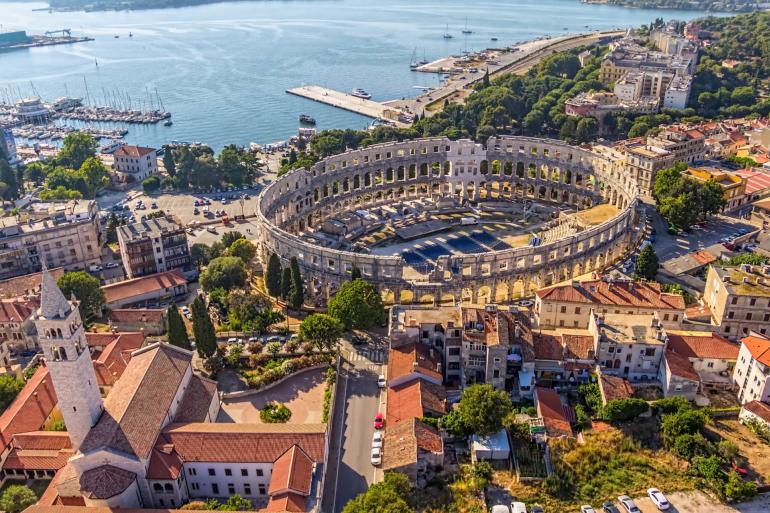 Photo: OPIS Zagreb
Pula’s Roman amphitheatre is one of the world’s best‑preserved arenas (built 27 BC–AD 68), still standing with its full circuit of walls and towers by the Adriatic
The Romans established industrial-scale olive cultivation here, and the oil you’ll taste is the direct legacy of that ancient agricultural enterprise. You are, quite literally, tasting history.
Zadar: How to See a Roman City Hidden in Plain Sight
Zadar’s Roman past is more subtle, and for many, more fascinating. The city’s old town still adheres to the rigid grid plan laid out by Roman urban planners. What feels like a charming medieval street is, in fact, the ancient Decumanus or Cardo. The remnants of the Forum are visible, but the real experience is understanding the invisible structure beneath your feet.
Deep in the Neretva Delta, the Narona Archaeological Museum offers one of the most specific and compelling Roman experiences in Croatia
A typical tour will walk you past the ruins. A specialist guide from RealCroatia will walk you through the Roman city itself. We’ll trace the original street plan, pointing out how subsequent medieval and Venetian construction was forced to adapt to the Roman layout. This is a unique intellectual exercise, a way to see how Roman logic continues to shape a European city two thousand years later.
Narona: An Emperor’s Cult, Unearthed
Deep in the Neretva Delta, the Narona Archaeological Museum offers one of the most specific and compelling Roman experiences in Croatia. It is built directly over the excavated ruins of an Augusteum—a temple dedicated to the cult of Emperor Augustus. You descend into the site itself, standing on glass walkways above the temple foundations, surrounded by a stunning array of marble statues of the imperial family that were discovered here.
 Photo: Uhryn Larysa
Zadar’s Roman Forum, the ancient administrative and commercial heart of Jadera shows an enduring legacy of classical urban planning
This isn’t a general history lesson; it's a direct look at the powerful propaganda machine that deified emperors and unified the empire. After immersing yourself in the imperial cult, we can arrange for a traditional lađa boat to take you through the serene wetlands of the delta, a stark and beautiful contrast to the rigid order of Roman power.
While the coast impresses with stone, the continental interior of Slavonia tells a different Roman story—one of imperial birthplaces, healing waters, and the constant, gritty reality of defending the frontier.
Vinkovci: The City of Emperors
Modern Vinkovci sits atop what was once Colonia Aurelia Cibalae, a major Roman city. Its primary claim to fame is staggering: it is the birthplace of two Roman emperors, the brothers Valens and Valentinian I. This fact alone makes it a site of immense historical importance.
In the rolling hills of Slavonia lies Daruvar, the site of Aquae Balissae, a Roman spa town built around natural thermal springs
While much of Roman Cibalae lies beneath the modern city, its legacy is fiercely celebrated. Each June, Vinkovci hosts the "Roman Days" festival, a vibrant event with legionary reenactments, craft workshops, and gladiator schools for children. For a traveler, this is a golden opportunity. We can build an itinerary around this festival, securing you behind-the-scenes access to meet with local archaeologists and reenactors who can explain the significance of the subterranean Roman baths still being excavated under the city center. It’s a chance to see a community actively engaging with its imperial past in a way you won’t find anywhere else.
Daruvar: Bathing Where Emperors Healed
In the rolling hills of Slavonia lies Daruvar, the site of Aquae Balissae, a Roman spa town built around natural thermal springs. The Romans revered this place. Emperors Hadrian, Marcus Aurelius, and Constantine the Great are all believed to have visited, seeking relief and healing in its potent waters.
While major excavations are limited, the Roman legacy is undeniable and continuous. The modern town’s spa complex sits on the same site, using the same water, continuing a 2,000-year-old tradition of wellness. The memory of the empire is even baked into the local geography, with place names like Rimska Šuma (Roman Wood) and Rimski Izvor (Roman Spring).
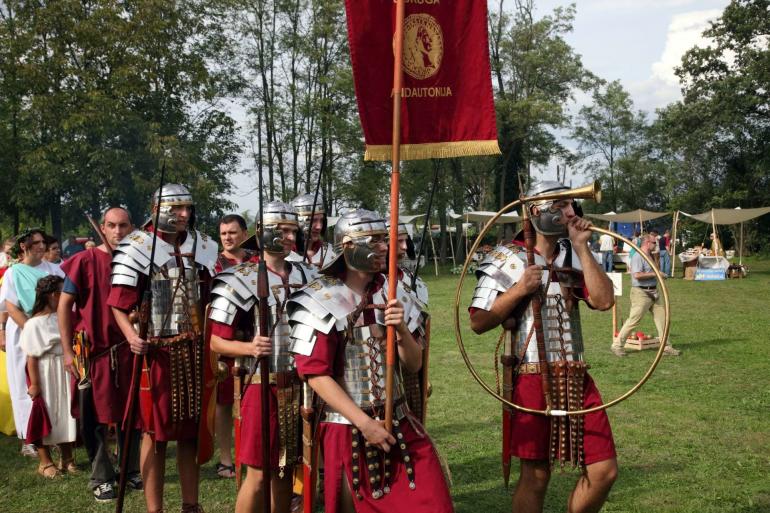 Photo: Zvonimir Atletic
Andautonia was the Roman township that once stood where Zagreb now spreads. Discover excavated street slabs, arcades and civic structures from the 1st–4th centuries AD
A stay here is a unique historical experience. We can arrange for you to spend a few days at a luxury spa hotel, allowing you to literally soak in the same experience as a Roman emperor, a perfect way to reflect on your journey through Croatia’s history.
The Pannonian Limes: Touching the Edge of the Empire
For the true history enthusiast, the northern frontier offers the most profound connection to the daily life of the Roman military. The Pannonian Limes was the vast system of forts and watchtowers along the Danube and Sava rivers that separated the Roman world from the "barbarian" territories beyond.
Roman Croatia is not a single story. It is a collection of powerful, diverse experiences waiting to be connected
This isn’t a single site but a landscape of scattered remains. Near Zagreb, the newly excavated settlement of Andautonia offers a glimpse into life in a Roman river port. Further east, the military camp of Burnum (technically in the Dalmatian interior but part of the same frontier system) still has the imposing arches of its headquarters standing sentinel above the Krka River canyon. Exploring this region requires expert navigation. We can design a specialized tour that connects these disparate sites, creating a narrative journey along the edge of the empire, far from any tourist trail. It's an experience for those who want to understand the grit and determination it took to hold the frontier.
From the Palace to the Frontier, a Journey Tailored to You
As you can see, Roman Croatia is not a single story. It is a collection of powerful, diverse experiences waiting to be connected. You can focus on the architectural grandeur of the coast, immerse yourself in the living culture of Slavonia’s festivals, or trace the lonely outposts of the imperial frontier.
Building such a trip requires more than a guidebook. It requires deep, local knowledge and the ability to open doors. Whether that means a private tour of an excavation site, a conversation with a local historian, or simply a seamless journey that combines luxury, relaxation, and profound historical discovery, that is our specialty.
Tell us what truly interests you. Is it military strategy? The daily life of citizens? The rise of Christianity? Let’s move past the generic and design a specific, tangible journey into the past.
Contact a RealCroatia specialist to begin designing your personal exploration of Roman Croatia.