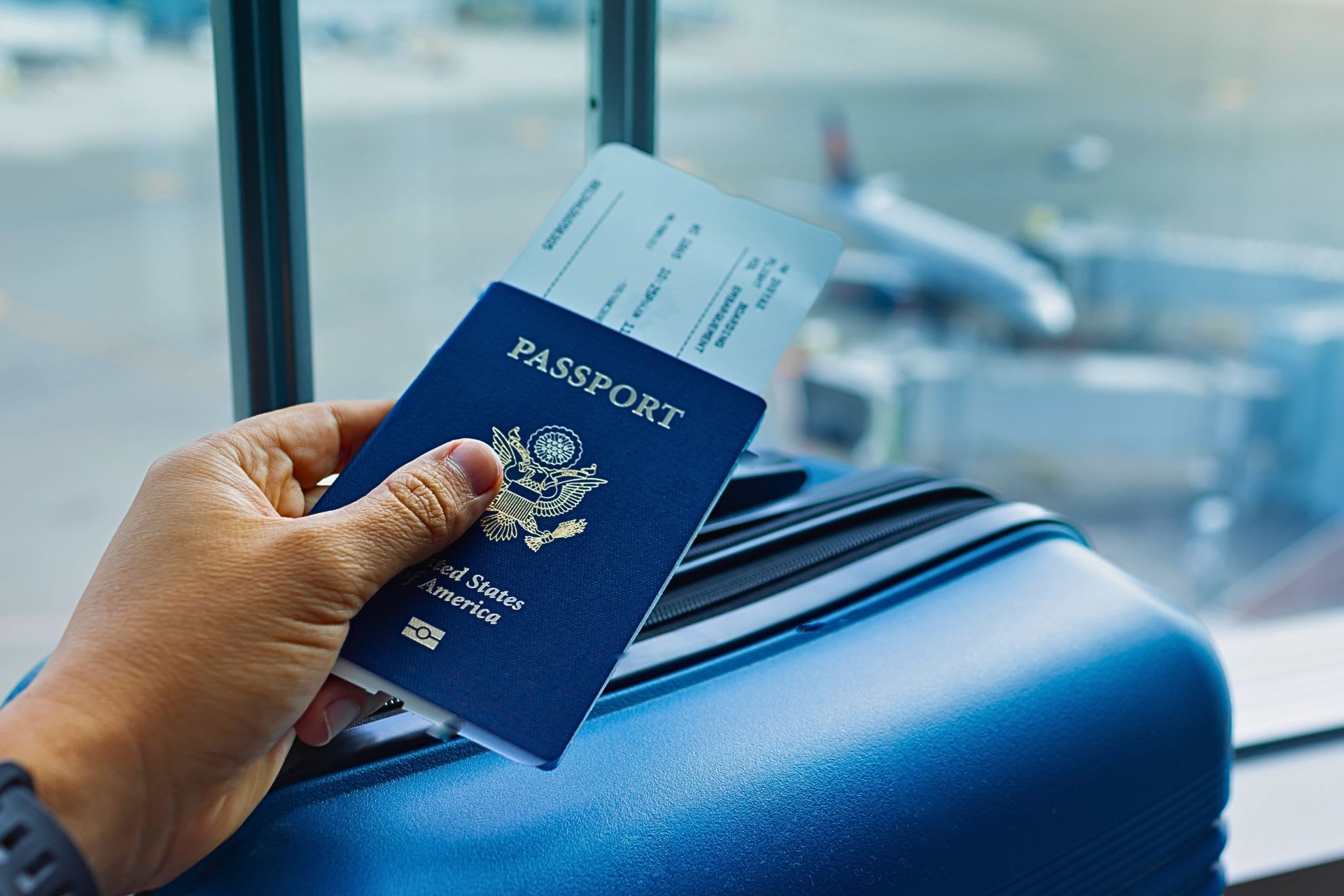

If you're booking European travel for North American clients this fall, there's a critical change you need to communicate: Starting October 12, 2025, every non-EU visitor entering the Schengen Area will be fingerprinted and photographed at the border.
This isn't a distant policy change or a pilot program—it's happening now, across all 29 participating countries, from the moment your clients land in Paris, Rome, Dubrovnik, or any other EU entry point.
As travel agents, you're the first line of information for clients who may be caught off-guard by this new requirement. With Croatia experiencing a 16% surge in American visitors this year and serving as a key destination in multi-country European itineraries, many of your clients will encounter the Entry/Exit System (EES) for the first time at Croatian borders.
Starting October 12, 2025, all non-EU visitors entering the Schengen Area—including Croatia—will be fingerprinted and photographed under the new Entry/Exit System
Here's what you need to know to prepare your clients, adjust your October and November bookings, and navigate what will likely be a bumpy but temporary transition period.
The Big Picture: This Is an EU-Wide System
The EES isn't a Croatia thing. It's not even a "some countries" thing. It's rolling out across all 29 Schengen Area countries plus Cyprus and Bulgaria. That means France, Spain, Italy, Greece, Portugal, Netherlands, Austria, Germany, Poland, Czech Republic, Croatia, and 18 more countries. Every single one is implementing the same system with the same fingerprinting, same facial recognition, and same digital tracking of entries and exits.
So why are we talking about Croatia specifically? Because Croatia, along with several other countries, is implementing this on October 12, 2025, and it's one of your most popular destinations for American clients right now. Your clients hitting Dubrovnik, Split, or Zagreb in October will be among the first Americans to experience this new system.
But make no mistake: whether your client enters through Paris, Rome, Athens, or Zagreb, they're getting fingerprinted. Croatia just happens to be where many Americans will encounter it first.
What Actually Happens at the Border
Your client arrives at any EU border checkpoint—airport, seaport, or land crossing. They approach either a self-service kiosk or an officer-staffed station. The passport gets scanned in about ten seconds, four fingerprints are captured in thirty seconds, and a facial photograph is taken in five seconds. Done.
First visit takes about three to five minutes total, possibly longer during the October launch chaos.
 Photo: Olesia Bilkei
The EES will automatically calculate how long each traveler can stay in the Schengen Zone, replacing manual passport checks
Return visits to any EU country just require a facial scan since the system already has their biometrics. Whether they're entering France three months later or Greece six months later, it's faster.
This replaces those passport stamps that have been the standard for decades. Every ink stamp, every manual entry, every barely-legible scribble from an overworked border officer—gone, replaced by a centralized digital database that tracks everything automatically.
Why the EU Is Actually Doing This
The passport stamp system was broken in ways most travelers never realized. Americans get 90 days in the Schengen Area within any 180-day period. Sounds simple, but calculating it with passport stamps was a nightmare. Stamps from different countries looked different, some were illegible or smudged, officers sometimes forgot to stamp entirely, and travelers had no reliable way to know their remaining days. Border officers had no quick way to verify compliance either. Result? Travelers accidentally overstayed, or worse, missed trips because they couldn't confidently calculate their remaining days.
There were also significant security gaps. With 29 countries, hundreds of border crossings, and manual stamp systems, there was no unified way to track who was actually in the Schengen Area. Someone could enter through Spain, exit through Poland, and nobody had a complete picture. And passport stamps can be forged, altered, or removed. Digital biometric records cannot.
Once registered (with fingerprints and a facial photo), travelers need only a facial scan for subsequent entries over a three-year period
The EES solves all of this with one centralized database that knows exactly when you entered, where you entered, how many days you've used, how many days you have left, and when you need to leave.
What This Means for Your European Itineraries
Your complex multi-country itineraries just got easier to plan. Before, if your client wanted to spend three weeks in Italy, two weeks in Croatia, a week in Greece, then three weeks in France later that year, you'd be breaking out the Schengen calculator, counting stamps, explaining the 90/180 rule, and hoping they didn't mess up the math.
Now the EES tracks everything automatically. Your client enters Italy in June and the system starts their 90-day clock. They move through Croatia and Greece and the system knows. They come back to France in October and the system calculates their remaining days instantly. No counting, no confusion, no overstay anxiety.
The initial hassle is that October through November 2025 is going to be rough. This is 29 countries launching new technology simultaneously, with millions of travelers who've never done this before, and border staff learning the system in real-time. Expect longer wait times (potentially 30-60 minutes longer at major airports), technical glitches, confused travelers, overwhelmed staff, and delays that ripple through tight connection schedules. By December, things should stabilize. By spring 2026, this becomes the new normal.
What Your Clients Need to Know
If they're traveling before October 12th, it's business as usual with passport stamps. If they're traveling October 12th or later to any EU country, they'll go through the EES registration.
 Photo: JGA
The EES marks a major digital shift in how Europe manages its borders, linking all Schengen countries into one unified biometric entry system
Once they're registered (fingerprinted and photographed), they're in the system for three years. Every subsequent entry into any EES country just requires a facial scan with no re-fingerprinting. So if they enter through Italy in October, then visit Croatia in November and Spain in December, they only get fingerprinted that first time in Italy.
Internal EU borders work the same as always. Once they're inside the Schengen Area, they move freely between countries without border controls. The EES only applies to external border crossings when entering or exiting the Schengen Area. The UK is not part of the Schengen Area and is not implementing EES, so UK entry requirements are separate and unchanged by this system.
For families, children under 12 are exempt from fingerprinting, though their passport still gets scanned. Children 12-17 require full biometric registration.
The Countries Your Clients Actually Visit
Let me make this concrete with the destinations Americans actually book. France (Paris, Provence, French Riviera), Italy (Rome, Florence, Venice, Amalfi Coast), Spain (Barcelona, Madrid, Andalusia, Balearic Islands), Greece (Athens, Santorini, Mykonos, Crete), Croatia (Dubrovnik, Split, Hvar, Plitvice), Portugal (Lisbon, Porto, Algarve), Netherlands (Amsterdam), Austria (Vienna, Salzburg), and Czech Republic (Prague) are all implementing the same fingerprinting process with the same digital system and the same three-year validity.
The new system replaces traditional passport stamps and centralizes entry/exit tracking across all 29 participating countries
Your client entering through Charles de Gaulle Airport in Paris gets the identical experience as someone landing in Athens, Barcelona, or Zagreb.
Why Croatia Is Still Important in This Story
Croatia specifically matters even though this is an EU-wide thing for several reasons. American tourism to Croatia is exploding—Croatia had 260,000 American visitors in just the first half of 2025, up 16% from last year. Americans are Croatia's fifth-largest tourist market now, with Dubrovnik seeing a 15% increase in US visitors in the first eight months of 2025. Translation: A lot of your clients are going to Croatia, and many will experience EES there first.
Croatia is often the "second country" in itineraries. Many Americans fly into a major hub like Paris, Rome, or London, then add Croatia as the interesting second destination. Which means they might enter the EU somewhere else, but Croatia is where they realize "oh, this system is everywhere now."
Croatia's infrastructure is also still catching up. While Croatia is absolutely capable of handling this, it doesn't have the massive international hub airports like Paris CDG or Frankfurt. Split and Dubrovnik are smaller operations, which means the learning curve might be steeper and delays potentially longer during the initial rollout.
Real Scenarios - This Actually Helps
Consider the Grand Tour client who books a three-month European adventure: two weeks in Italy, three weeks in France, a week in Croatia, two weeks in Spain, then three weeks in Greece. Under the old system, they'd be obsessively counting passport stamps, using online calculators, and panicking about whether they calculated correctly. With the new system, they enter Italy, their 90-day clock starts, and the EES tracks every entry and exit automatically across all five countries. When they hit day 85 in Greece, the system knows they have five days left. No math, no mistakes.
During the initial months, travelers should expect longer border wait times and potential technical glitches
Or take the frequent Europe traveler who visits Europe three times a year—spring in Paris, summer in Croatia, fall in Barcelona. The old system meant three separate passport stamps, manual tracking, and uncertainty about whether they're approaching the 90/180 limit. The new system tracks all three trips in one database. When they arrive in Barcelona in October, the system automatically calculates how many days they've used in the previous 180 days and how many they have left. Instant, accurate, automatic.
 Photo: Alexey Sizov
Frequent visitors are encouraged to allow extra time at airports and land borders in the first months after launch
Then there's the extended stay scenario where your client spends all of September in Italy, then books a last-minute October trip to Croatia before heading home. Under the old system, they'd be counting days, checking stamps, and maybe not even booking Croatia out of overstay fear. With the new system, when they arrive in Croatia on October 1st, the border officer's screen immediately shows "29 days used, 61 days remaining." They know exactly where they stand.
What to Tell Clients Right Now
For October 2025 travel, the message is straightforward: "The EU is launching a new digital border system on October 12th. You'll be fingerprinted and photographed when you enter—it's quick, it's mandatory, and it replaces passport stamps. Plan for longer wait times during the first few weeks, and add an extra hour to your airport arrival time if you have tight connections."
After the transition phase, multi-country European itineraries will become simpler and more transparent, with the system automatically monitoring each traveler’s Schengen-area days
For November 2025 and beyond: "Europe's new border system will be running by the time you travel. You'll register once with fingerprints and photo, then future EU trips just need a facial scan. It actually makes tracking your 90-day limit easier because the system does the math for you."
For multi-country itineraries: "The good news about the new system is you only register once, even if you're visiting multiple European countries. Your first entry point captures your biometrics, then you're in the system for three years across all EU countries."
The Stuff Nobody's Saying Out Loud
Will Americans complain? Absolutely. We're not used to being fingerprinted for vacation destinations. It feels invasive, bureaucratic, and vaguely like we're being treated as security threats rather than tourists spending money.
Will it slow down October travel? Yes. Massively. The first month of any new system is chaos, and this is 29 countries launching simultaneously. If your clients are traveling to Europe between October 12th and November 15th, build in buffer time everywhere.
Will this hurt European tourism? Probably not long-term. Americans will grumble, but we'll still book Paris, Rome, and Dubrovnik because they're Paris, Rome, and Dubrovnik. A five-minute border process won't compete with centuries of culture, food, and history.
 Photo; Anton Ivanov
Croatia, as the newest Schengen member, will fully implement EES procedures at all international entry points
Is this just the beginning? Yes. Coming in late 2026 or 2027 is ETIAS—a pre-travel authorization system (like ESTA for the US) that'll cost about €7 and require an online application before travel. Think of EES as phase one and ETIAS as phase two of Europe's border security overhaul.
How This Changes Your Job
In the short term from October through December 2025, you need to build extra time into October and November itineraries, warn clients about the new process before they travel, expect complaints and delays, and have backup plans for tight connections.
Long term in 2026 and beyond, multi-country European itineraries become easier to plan. The 90/180 day rule becomes automatic and foolproof. Repeat European travelers move through borders faster. And you spend less time explaining Schengen calculations.
The real change is this: you're no longer booking trips to individual European countries. You're booking trips to a digitally-connected system where every entry and exit is tracked automatically. That's either liberating or dystopian depending on your perspective, but it's definitely the new reality.
Bottom Line
Starting October 12th, every American entering the EU gets fingerprinted. Italy, France, Spain, Greece, Croatia—doesn't matter. One system, 29 countries, same process.
Croatia matters because that's where many of your clients are headed, but the story is bigger than one country. This is the EU fundamentally changing how travel works.
The Entry/Exit System (EES) aims to tighten EU border security while making crossings more efficient once the system stabilizes
Your job is to prepare clients for the initial chaos, explain why it's happening, and help them understand that after the rough October launch, this actually makes European travel less complicated, not more.
The fingerprinting is weird. The launch will be messy. But the system solves real problems with the old stamp-based chaos.
Tell your clients to bring patience in October, and by their second Europe trip, they'll be breezing through borders faster than ever before.
Have questions about navigating the new EES system across multiple European countries? Contact Real Croatia for guidance on preparing your clients for smooth arrivals starting October 12th.